
Speakers
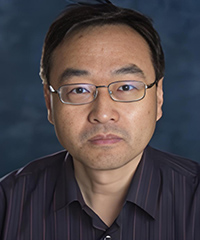
Xiaodong Liu
Professor, Edinburgh Napier University, UK.
Research field: Pervasive systems (Internet of Things), Service-oriented architecture, Evolution of cloud services, and Intelligence-driven smart systems.
Prof. Xiaodong Liu has been very active in the research in AI-driven software engineering, focusing on pervasive systems (Internet of Things), service-oriented architecture, evolution of cloud services, and intelligence-driven smart systems. He has won 12 external grants and successfully led or leading these externally funded projects with the role of principal investigator. Currently Prof. Liu leads the Intelligence-Driven Software Engineering Research Group. He is the founder a spin out company, FlexiCAGE Ltd. He has published 170 papers in refereed international journals and conferences and 5 book chapters. He is the inventor of 1 patent in Generative Component Adaptation registered in UK, USA and at International Level (PCT). He has been the chair, co-chair or PC member of a number of IEEE and IASTED International Conferences. He is the associate editor of 2 international journals and the editorial board member of 3 international journals. He is the chief editor of 3 IGI Global Research Handbooks. He is the regular reviewer of other 6 international journals. He is a senior member of IEEE Computer Society, and a member of British Computer Society.
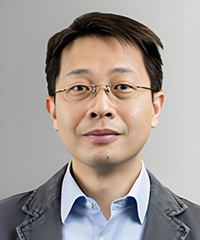
Philip W. T. Pong
Associate Professor, New Jersey Institute of Technology, USA.
Research field: Fault detection, Predictive maintenance, and Anomaly detection of power grid.
Philip W. T. Pong received a B.Eng. from the University of Hong Kong (HKU) in 2002 with 1st class honours. Then he obtained a PhD in engineering at the University of Cambridge in 2005. He was a postdoctoral researcher at the Magnetic Materials Group at the National Institute of Standards and Technology (NIST) for three years. Currently he is an Associate Professor in the Department of Electrical and Computer Engineering at New Jersey Institute of Technology (NJIT). His research interest focuses on the fault detection, predictive maintenance, and anomaly detection of power grid. He is the Founding Director of the Green Technology Research and Training Laboratory, leading the research and education activities of offshore wind energy at NJIT. Philip Pong is a Fellow of the Institution of Engineering and Technology (FIET), a Fellow of the Institute of Physics (FInstP), a Fellow of the Energy Institute (FEI), a Fellow of the Institute of Materials, Minerals and Mining (FIMMM), a Fellow of the Hong Kong Institution of Engineers (FHKIE), a Fellow of the NANOSMAT Society (FNS), a chartered physicist (CPhys), a chartered engineer (CEng), a chartered energy engineer, a registered professional engineer (R.P.E. in Electrical, Electronics, Energy), and a Senior Member of IEEE (SMIEEE). He serves on the editorial boards for several IEEE and SCI journals.
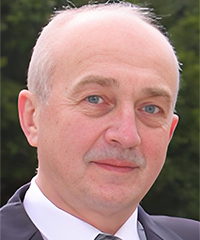
Vladimir G Chigrinov
Professor Emeritus, Hong Kong University of Science and Technology, HK, China.
Research field: Computer modeling of various electrooptical effects in Liquid Crystals (LC), Photo-aligning technique for LCD applications, LC devices in fiber optics, Fast multistable ferroelectric liquid crystal devices.
Professor Vladimir G. Chigrinov is Professor of Hong Kong University of Science and Technology since 1999. He is an Expert in Flat Panel Technology in Russia, recognized by the World Technology Evaluation Centre, 1994, and SID Fellow since 2008. He is an author of 6 books, 31 reviews and book chapters, about 333 journal papers, more than 718 Conference presentations, and 121 patents and patent applications including 50 US patents in the field of liquid crystals since 1974. He got Excellent Research Award of HKUST School of Engineering in 2012. He obtained Gold Medal and The Best Award in the Invention & Innovation Awards 2014 held at the Malaysia Technology Expo (MTE) 2014, which was hosted in Kuala Lumpur, Malaysia, on 20-22 Feb 2014. He is a Member of EU Academy of Sciences (EUAS) since July 2017. He got A Slottow Owaki Prize of SID in 2018. He is 2019 Distinguished Fellow of IETI (International Engineering and Technology Institute). Since 2018 until 2020 he works as Professor in the School of Physics and Optoelectronics Engineering in Foshan University, Foshan, China. 2020-2024 Vice President of Fellow of Institute of Data Science and Artificial Intelligence (IDSAI) Since 2021 distinguished Fellow of Institute of Data Science and Artificial Intelligence. He is IETI Fellow since 2019. Since March 2022 he is A Fellow of National Academy of Technology for his contributions to Information Electrical and Electronic Research. He is a Editor in Chief of Liquid Crystal section in Crystals journal since 2023.
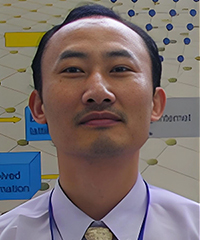
Hong Shen
Professor, Central Queensland University, Australia.
Research field: Algorithms, Parallel computing, Networking, Data mining, Data privacy protection.
Hong Shen is a specially-appointed Professor in Sun Yat-sen University, China, where he was the foundation Director of SYSU's Institute for Advanced Computing. He is also an Adjunct Professor in the University of Adelaide, Australia, where he was a tenured Professor (Chair of Computer Science) for 15 years. He received the BS degree from Beijing University of Science and Technology, MS degree from University of Science and Technology of China, and PhD degree from Abo Akademi University, Finland. Dr Shen was Professor and Chair of the Computer Networks Laboratory in Japan Advanced Institute of Science and Technology (JAIST), and Professor of Computer Science at Griffith University. With main research interests in parallel and distributed computing, privacy preserving computing and high performance networks, he has led numerous research centers and projects in different countries. He has published 400+ papers including over 100 papers in major international journals such as a variety of IEEE and ACM transactions. Dr. Shen received many honors and awards, and served on different roles in professional societies, journal editorial boards and conference committees.
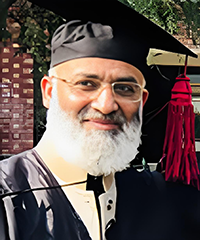
Nadeem Javaid
Professor, National Yunlin University of Science and Technology (YunTech), Taiwan, China.
Research field: Artificial intelligence, Data analytics, IoTs, Smart grids, Blockchain.
NADEEM JAVAID received the Ph.D. degree from the University of Paris-Est Creteil (UPEC), France, in 2010. He is currently Professor and the Founding Director of the Communications Over Sensors (ComSens) Research Laboratory, International Graduate School of Artificial Intelligence, National Yunlin University of Science and Technology (YunTech), Taiwan. He was a Visiting Professor with the University of Technology Sydney (UTS), Australia. He has supervised 203 master's and 34 Ph.D. thesis. He has authored over 950 articles in technical journals and international conferences, three books, and U.S. patent. His research interests include AI in smart, health care, wireless sensor networks, blockchain, etc. He has delivered many keynote and invited speeches in national and international conferences. With 30,000 Citations and an H-Index of 85, he is included in Engineering and Technology/Computer Science in the Stanford University's List of Top 2% Scientists in the World.
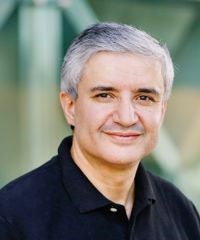
Mohamed-Slim Alouini
Al-Khawarzmi Distinguished Professor, Electrical and Computer Engineering, King Abdullah University of Science and Technology, Saudi Arabia.
Research field: MIMO techniques, Multi-hop and cooperative communications, Optical wireless communication systems, Cognitive radio systems, Green communication systems, Underwater/maritime communication systems and integrated ground-airborne-space networks.
Throughout his 30-year academic career, Professor Mohamed-Slim Alouini, an IEEE and OPTICA Fellow, has developed analytical and simulation tools for evaluating the performance of radio-frequency and optical wireless communication systems. He has also designed and optimized innovative technologies for emerging wireless networks.
Professor Alouini, a co-founder of KAUST's ECE program, inspires future engineers through his pioneering work in wireless communications. His integrated space-air-ground networks, spectrum sharing schemes, and optical wireless communication systems research shape connectivity's future and embody KAUST's scientific excellence and global impact.
Professor Alouini has published numerous conference and journal papers and co-authored the textbook Digital Communication over Fading Channels, published by Wiley Interscience. A former editor of IEEE Transactions on Communications and IEEE Transactions on Wireless Communication, he also served as an editor for IEEE Transactions on Mobile Computing and the Wireless Communications and Mobile Computing journal. He was also a series editor for the IEEE Communication Magazine's Optical Communication and Networks Special Series and the founding field chief editor for the Frontiers in Communications and Networks journal. He is now the Founding Editor-in-Chief for the Nature Partnership Journal (NPJ) on Wireless Technologies (since 2025) and an editor for the IEEE Transactions on Aerospace and Electronics Systems (since 2022).
Professor Alouini has been an IEEE Distinguished Lecturer for the IEEE Communication Society (2016-2017), the IEEE Vehicular Technology Society(2018-2022), the IEEE Aerospace and Electronic Systems Society (2023-2024), and the IEEE Photonics Society (2025)

Kansong Chen
Professor, Hubei University, China.
Research field: Computer Vision and Artificial Intelligence, Real-scene 3D and Digital Twins, Edge Intelligence and Industrial Internet, etc.
Kansong Chen is a Postdoctoral Fellow at the University of Cambridge and a Visiting Professor at the University of Notre Dame, USA. He is a recipient of the National Cyberspace Innovation Talent Support Program, Hubei Chutian Talents Outstanding Engineer Program, Highly Cited Scholar of CNKI, and Distinguished Expert of Hubei Province. He has presided over the National Natural Science Foundation of China projects, subjects of the National Science and Technology Support Program, major special projects of Hubei Province, key research and development programs of Hubei Province, key projects of Hubei Natural Science Foundation, Wuhan Science and Technology Research Program, and multiple industry-university cooperative horizontal projects. He has published more than 50 papers as the first or corresponding author in key domestic and international journals. As the first inventor, he holds 2 US invention patents and 11 Chinese invention patents, together with over 50 software copyrights.
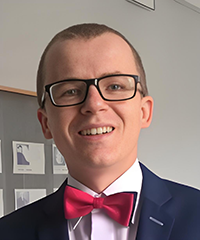
Artur Czerwinski
Assistant Professor, Nicolaus Copernicus University in Torun, Poland.
Research field: Quantum, Quantum technologies, Quantum information science, Open quantum systems, Quantum optics.
Artur Czerwinski (born in 1990) received his Ph.D. in Physics from Nicolaus Copernicus University in Toruń, Poland, in 2018, specializing in Mathematical and Quantum Physics under the supervision of Prof. Andrzej Jamiołkowski. During his doctoral studies (2014–2016), he also conducted research at the Center for Theoretical Physics of the Polish Academy of Sciences. From 2019 to 2022, he worked at the Institute of Physics, Nicolaus Copernicus University in Toruń, contributing to the project Applications of Single-Photon Technologies led by Prof. Piotr Kolenderski. He then held a postdoctoral position at the Centre of New Technologies, University of Warsaw (2022–2023), where he worked on quantum optical technologies, particularly implementing an optical key distribution protocol for satellite-based optical communications. In 2024–2025, he served as an Assistant Professor at Nicolaus Copernicus University, working in the Single Photon Applications Laboratory and contributing to the project "Secure Quantum Communication in Multiplexed Optical Networks." Since 2024, he has been the Lead Researcher at Startova UMK LLC, a special-purpose vehicle established for technology deployment. He is actively involved in projects funded by the European Space Agency, including "CCSDS Standardized Ranging for Optical Communication Terminals," "Multi-dimensional Free-space Quantum Key Distribution Protocol," and "Space-Based Links for the Quantum Internet." He is the author of over 45 papers.

Ziaur Rahman
Associate Professor, Huanggang Normal University, China.
Research field: Image enhancement, Image processing, Computer vision, Deep learning, Medical image analysis, Computational pharmacology.
Ziaur Rahman received the Bachelor of Computer Science degree from the University of Peshawar, Pakistan, in 2012, and the Master in Software Engineering degree from Chongqing University, China, in 2017. He obtained the Ph.D. degree in Computer Science from Sichuan University, Chengdu, China, in 2021. He has been working as an Associate Professor at the School of Computer Science and Artificial Intelligence, Huanggang Normal University, China, since November 2024 (previously serving as a Distinguished Associate Professor from 2021 to 2024). His research contributions demonstrate a sustained record of scholarly excellence. He has published more than 30 international SCI journal papers and multiple international conference papers, and has delivered presentations at many national and international conferences. He has contributed to academic books with book chapters and serves as a peer reviewer for several internationally recognized scientific journals, including IEEE Transactions on Image Processing, Future Generation Computer Systems, and Signal Processing: Image Communication. He has been recognized with the CHUTIAN Scholar title from the Hubei Provincial Department of Education (2024) and has received competitive research grants from the National Natural Science Foundation of China (NSFC) in 2025 and 2026.

Muhammad Ishfaq
Associate Professor, Huanggang Normal University, China.
Research field: Machine learning-based virtual screening, AI-driven drug discovery, Computational pharmacology and toxicology, Natural-product interventions against inflammatory and infectious diseases, Drug-resistant bacterial infections.
Muhammad Ishfaq received the Doctor of Veterinary Medicine (DVM) degree from the College of Veterinary Sciences, The University of Agriculture, Peshawar, Pakistan, in 2014. He then obtained the Master's and Ph.D. degrees in Basic Veterinary Medicine (Pharmacology and Toxicology) from Northeast Agricultural University, Harbin, China, in 2018 and 2021, respectively. He has been working as an Associate Professor of Computational Pharmacology and Toxicology at Huanggang Normal University since August 2021. He has published more than 130 international journal papers, 35 of them as first, co-first or corresponding author, including a contribution in Science. He edited the academic book Computational Methods in Medicinal Chemistry, Pharmacology, and Toxicology (Academic Press, Elsevier, 2025) and has contributed 16 book chapters to scholarly volumes. He holds two published international patent applications. He has also presented his work at national and international conferences. He serves as an Associate Editor of Frontiers in Pharmacology and as a peer reviewer for many internationally recognized journals. He is a Full Member of the British Pharmacological Society.

Zaheer Ahmed Dayo
Associate Professor, Huanggang Normal University, China.
Research field: Electromagnetic wave and Propagation, Microwave & RF engineering and measurements.
Dr. Zaheer Ahmed Dayo is currently working in the field of Electromagnetic wave and propagation particularly focused on microwave & RF engineering and measurements areas. He has vast teaching and research experience of more than 12 years. His research interests include Modeling, Designing and Manufacturing of Compact, Flexible, High Performance Planar Antennas, Millimeter-wave Broadband MIMO Antennas, Wave propagation behavior in electronic devices, Circuit Design for the Compact Antennas, 3D antenna array topology for 5G / 6G and Heterogeneous Wireless Communication Applications, Antennas for modern SATCOM and Military RADAR Applications, Antenna Optimization schemes, Multiband and slot Antennas, Reconfigurable and metamaterial inspired Antennas, Metasurfaces, Phased array Antennas, Active and passive frequency selective surfaces (FSS) and Reconfigurable Intelligent Surface (RIS).

Jameel Ahmed Bhutto
Associate Professor, Huanggang Normal University, China.
Research field: Image fusion, Image enhancement, Artificial intelligence, Machine vision, Machine learning.
Jameel Ahmed Bhutto received the Bachelor of Engineering degree in Telecommunication Engineering and the Master of Engineering degree in Communication Systems and Networking from Mehran University of Engineering and Technology, in 2010 and 2016, respectively. He obtained the Ph.D. degree in Pattern Recognition and Intelligent Systems from South China University of Technology, Guangzhou, China, in 2022. He has been working as an Associate Professor at the College of Computer Science and Artificial Intelligence, Huanggang Normal University since July 2022. His research contributions demonstrate a sustained record of scholarly excellence. He has published more than 30 international SCI journal papers, multiple international conference papers, and has delivered presentations in many national and international conferences. He has edited academic book and contributed over five book chapters to different scholarly volumes. He has published two international patents. He serves as a peer reviewer for several internationally recognized scientific journals, supporting the academic community through manuscript evaluation.

Muhammad Aamir
Associate Professor, Sichuan Technology and Business University
Research field: Pattern recognition, Computer vision, Medical image processing, Deep learning, and Machine vision.
Dr. Muhammad Aamir received his Bachelor of Engineering degree in Computer Systems Engineering from Mehran University of Engineering & Technology, Jamshoro, Sindh, Pakistan, in 2008. He went on to earn a Master of Engineering degree in Software Engineering from Chongqing University, China, in 2014, and later completed his Ph.D. in Computer Science and Technology from Sichuan University, Chengdu, China, in 2019. Previously, Dr. Aamir was an Associate Professor and Chutian Scholar at Huanggang Normal University, China, where he led research initiatives in artificial intelligence and medical imaging. With extensive research experience and a prolific publication record, Dr. Aamir has made significant contributions to various fields including pattern recognition, computer vision, medical image processing, deep learning, and machine vision. His expertise and dedication to advancing these areas have earned him recognition as a peer reviewer for numerous prestigious journals and as an organizing committee member for several international conferences.
Latest News
February 06, 2026
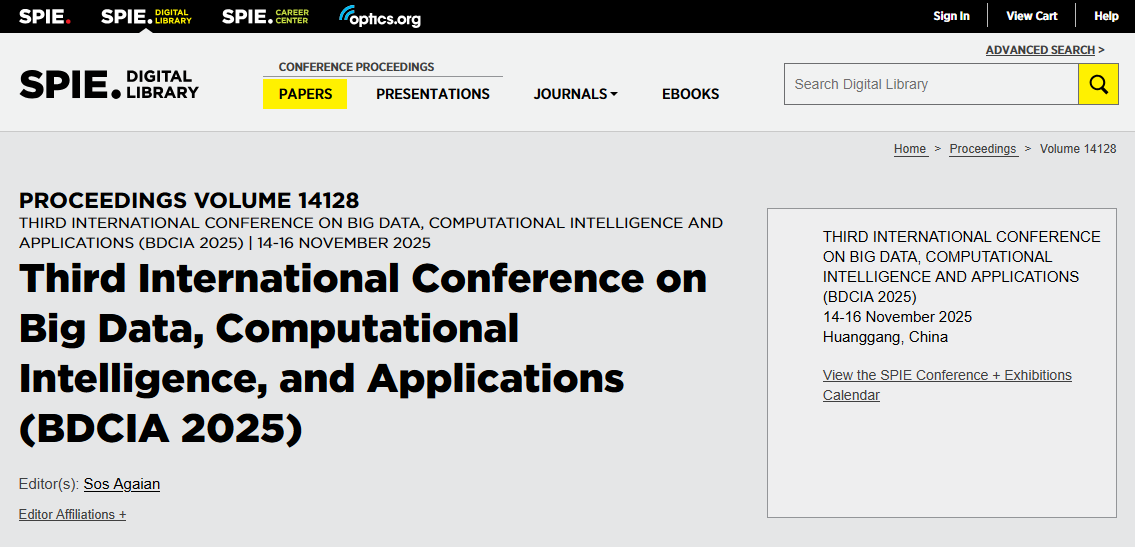
BDCIA 2026 has got publishing support by SPIE! →December 17, 2025
BDCIA 2026 starts calling for papers →November 17, 2025
BDCIA 2025 has been successfully held! →April 15, 2025
BDCIA2025 has got publishing support by SPIE! →Supported By